

Complete Guide to Marquise Cut Diamonds
The marquise cut is one of the most distinctive diamond shapes you can choose — an elongated, boat-shaped stone with pointed ends that makes fingers look longer and carries more visual size per carat than almost any other cut. If you're shopping for a marquise cut diamond in Dallas, this guide covers what makes the shape special, what to look for, and what to avoid.
What Is a Marquise Cut Diamond?
The marquise (pronounced "mar-KEYS") is a modified brilliant cut with 56–58 facets, shaped like an elongated oval with a point at each end. The shape dates back to 18th-century France, where King Louis XV commissioned a diamond cut to resemble the smile of the Marquise de Pompadour — which is where the name comes from.
Because the marquise is long and shallow relative to its weight, it has one of the largest face-up areas of any diamond shape. A 1-carat marquise looks noticeably larger than a 1-carat round brilliant, which makes it one of the smartest choices for maximizing visual size on a budget.
Why Choose a Marquise Cut
- Maximum spread per carat. The marquise's face-up surface area is roughly 15–20% larger than a round diamond of the same weight, so your budget goes further visually.
- A flattering, elongating look. The pointed ends draw the eye along the finger — the same reason elongated shapes like oval, pear, and marquise dominate current engagement ring trends.
- Lower price per carat. Fancy shapes cost less than round brilliants because less rough diamond is wasted in cutting. A marquise typically runs 10–25% cheaper than a comparable round.
- A vintage look that stands out. Marquise cuts peaked in popularity in past decades, which today makes them a distinctive choice — you won't see your ring on every hand in Dallas.
What to Watch For: The Bow-Tie Effect
Every elongated brilliant cut — marquise, oval, pear — can show a bow-tie: a dark, bow-shaped shadow across the center of the stone caused by light leakage. Some bow-tie is normal; a heavy, black bow-tie kills the sparkle.
Here's the critical part: a bow-tie cannot be seen on a grading certificate. GIA reports don't grade cut quality for fancy shapes, so two marquise diamonds with identical paperwork can look completely different in person. This is the single strongest argument for inspecting a marquise diamond with your own eyes before buying — not from photos, not from a certificate.
Ideal Marquise Proportions
- Length-to-width ratio: 1.75–2.25 is the classic range. Below 1.75 the stone looks stubby; above 2.25 it looks narrow and thin. Around 2.0 is the sweet spot for most buyers, but this is ultimately personal taste — always compare ratios side by side.
- Symmetry: The two points must align perfectly on the stone's axis, and both halves should mirror each other. Even slight asymmetry is visible in a marquise.
- Color and clarity: The pointed ends concentrate color, so marquise cuts show warmth more than rounds. H color and above stays visibly white; the brilliant faceting hides inclusions well, so VS2–SI1 clarity is usually eye-clean.
- Protect the points: The two tips are the most vulnerable part of the stone. Choose a setting with V-shaped prongs covering both points — this is standard practice in any well-made marquise ring.
How to Buy a Marquise Cut Diamond in Dallas
Because cut quality for marquise diamonds isn't captured on certificates, buying one sight-unseen is a gamble. The better approach is to compare several stones in person, under magnification, side by side.
At Aura Diamonds in Dallas, that's exactly how the process works. As a wholesale diamond dealer, we carry our own inventory of marquise cut diamonds — so you compare real stones, not stock photos. Every appointment starts with a free diamond education session: you'll learn to spot a bow-tie, judge symmetry, and evaluate length-to-width ratio with a loupe in your hand before you ever discuss a purchase.
Once you've chosen your stone, our designers can build a custom engagement ring around it — from V-prong solitaires to vintage-inspired halo settings — with a 3D rendering and wax model to approve before crafting begins, at wholesale pricing with no extra design fee.
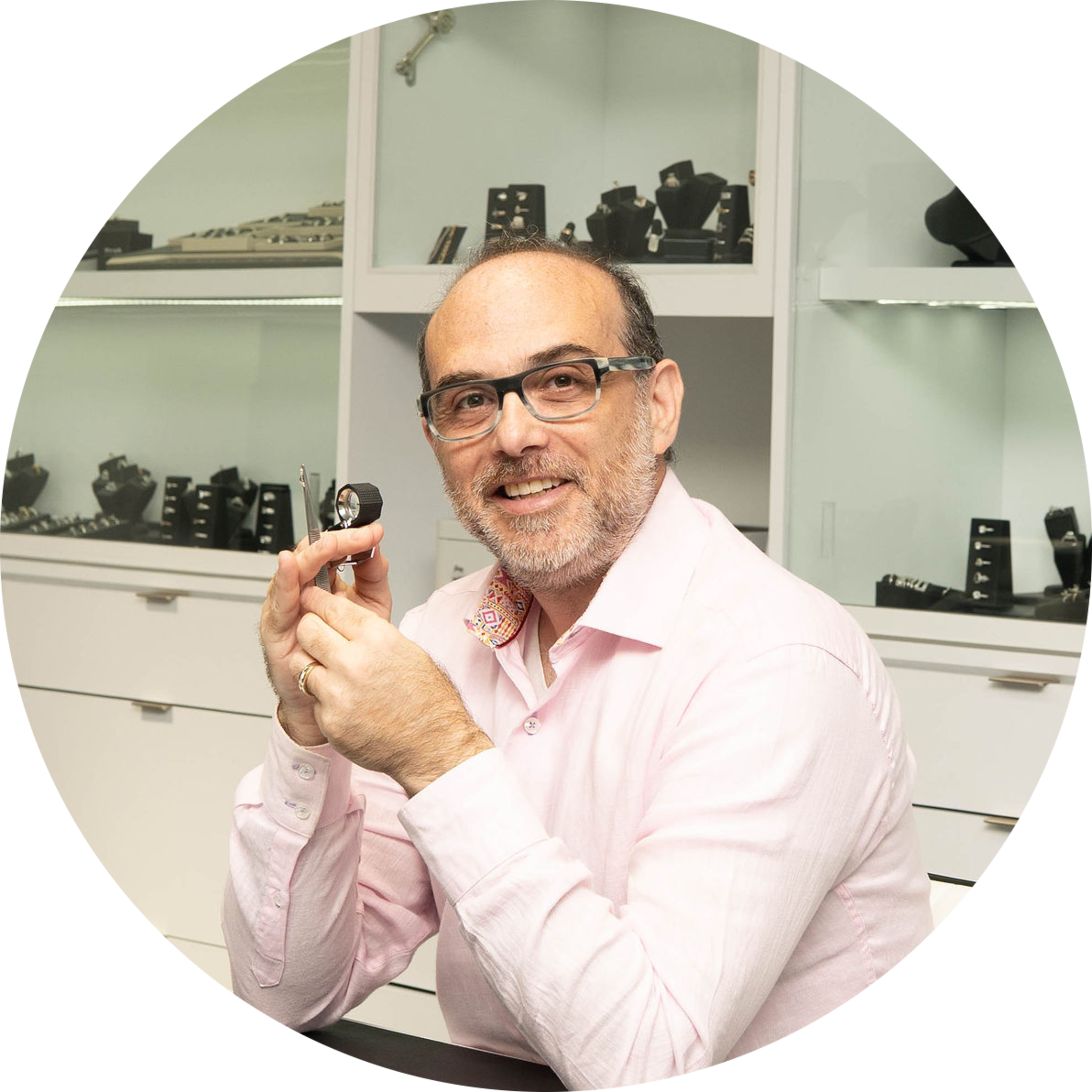
Mitch Rosen
Diamond ExpertMitch Rosen has over 29 years of experience in the diamond industry, specializing in natural diamonds. As a diamond expert at Aura Diamonds, he helps clients navigate the 4Cs to find the perfect stone for every occasion - combining deep technical knowledge with a patient, honest approach to every client.